Investment
Capital to fund manufacturing, tooling, FDA registration, and go-to-market for both product lines.
For investors & partners
Working prototypes of both devices exist today. A US provisional patent is filed, the regulatory path is a Class I registration, and prior patents in the space have lapsed. What EarArmor needs now is capital and commercialization expertise, and that's why this page exists.
Stage
Prototype finalization; clinical use in founder's practice
Intellectual property
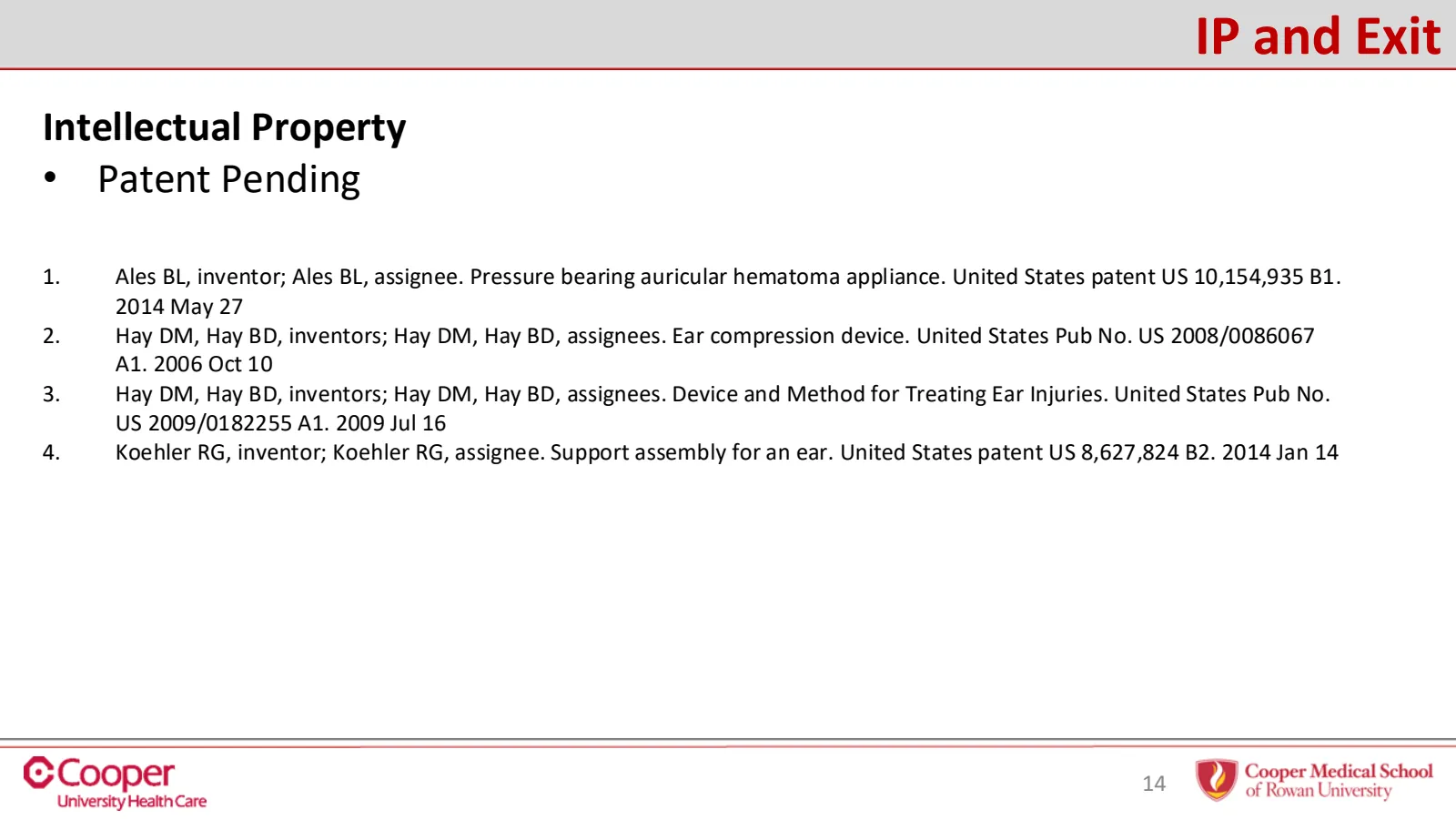
US provisional patent application filed
Regulatory
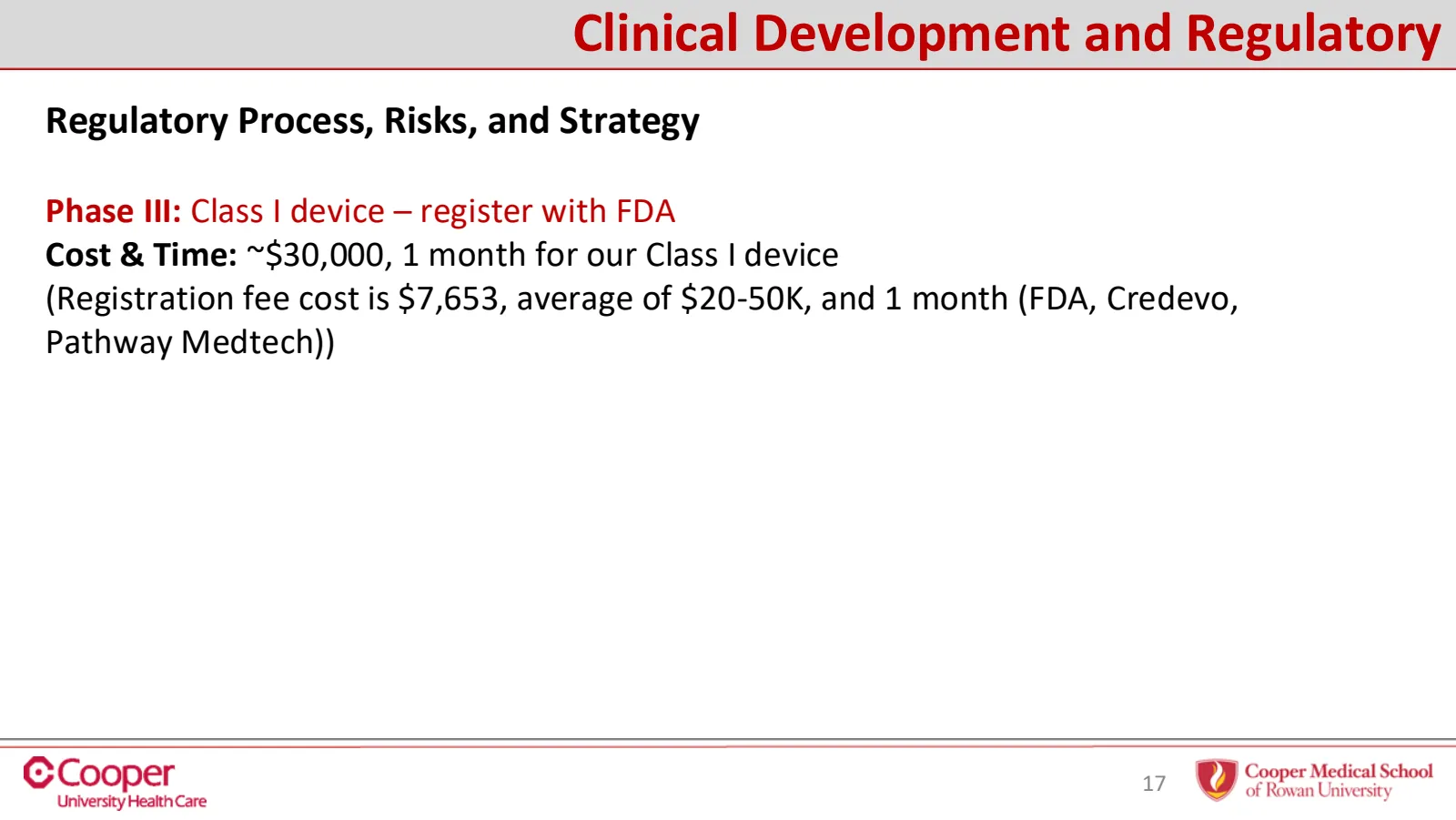
FDA Class I registration~$30K · ~1 month
Backing
Funding support by Foundation Venture Capital Group
The thesis
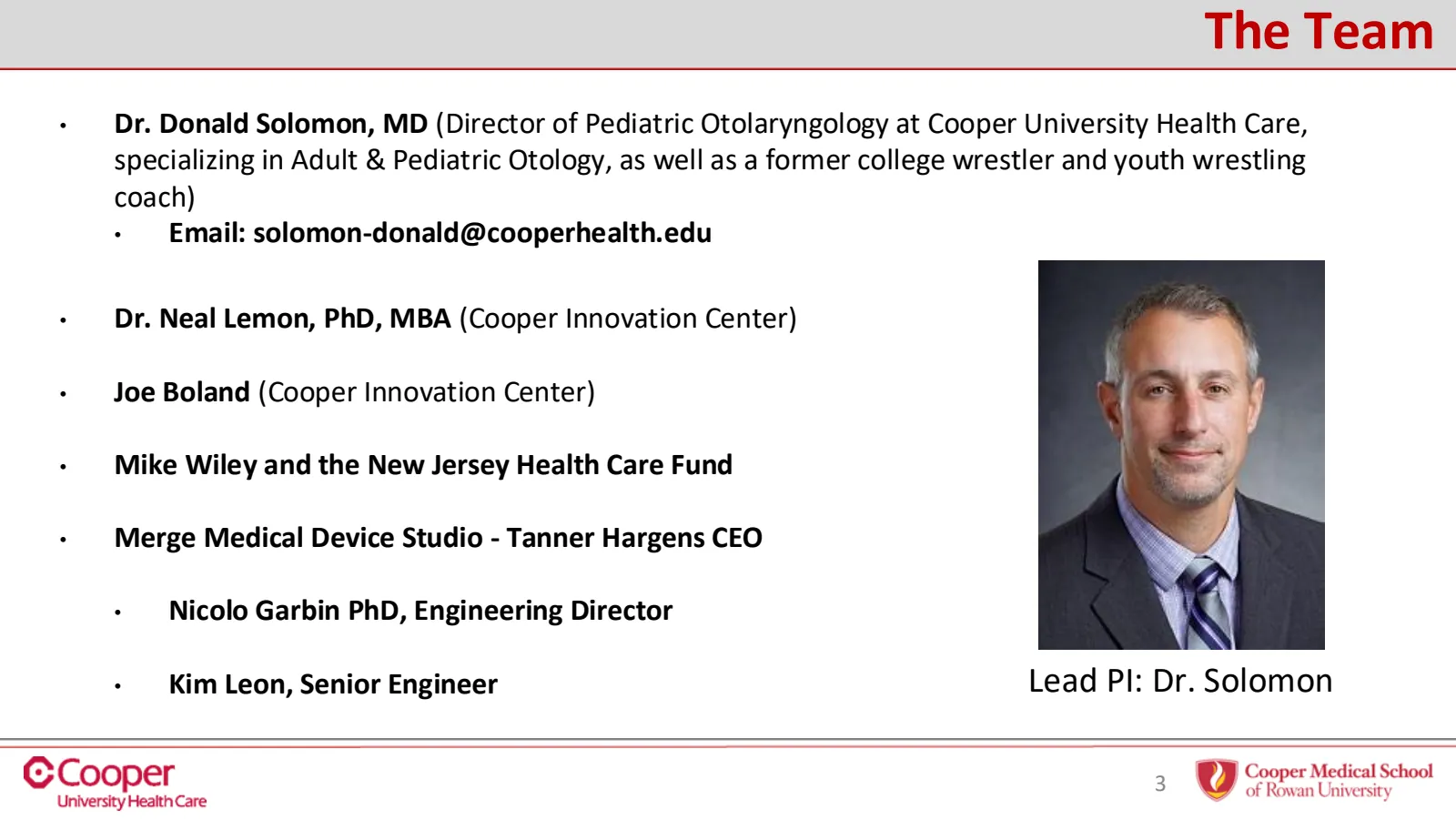
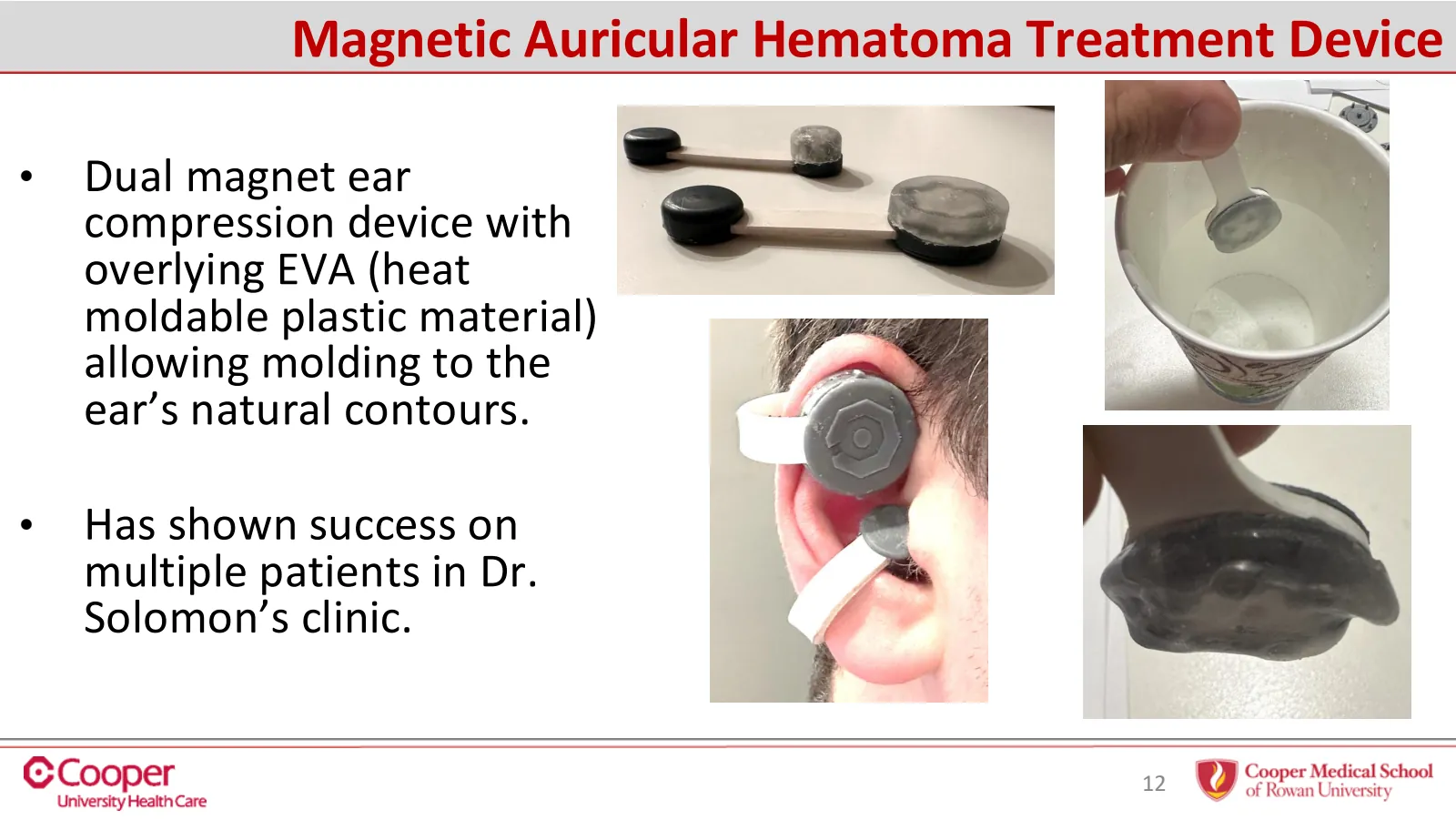
Invented by the ENT surgeon who treats auricular hematoma regularly in his practice, refined with Merge Medical Device Studio, and already used successfully on multiple patients in clinic. The design answers real clinical failure modes, not a market survey.
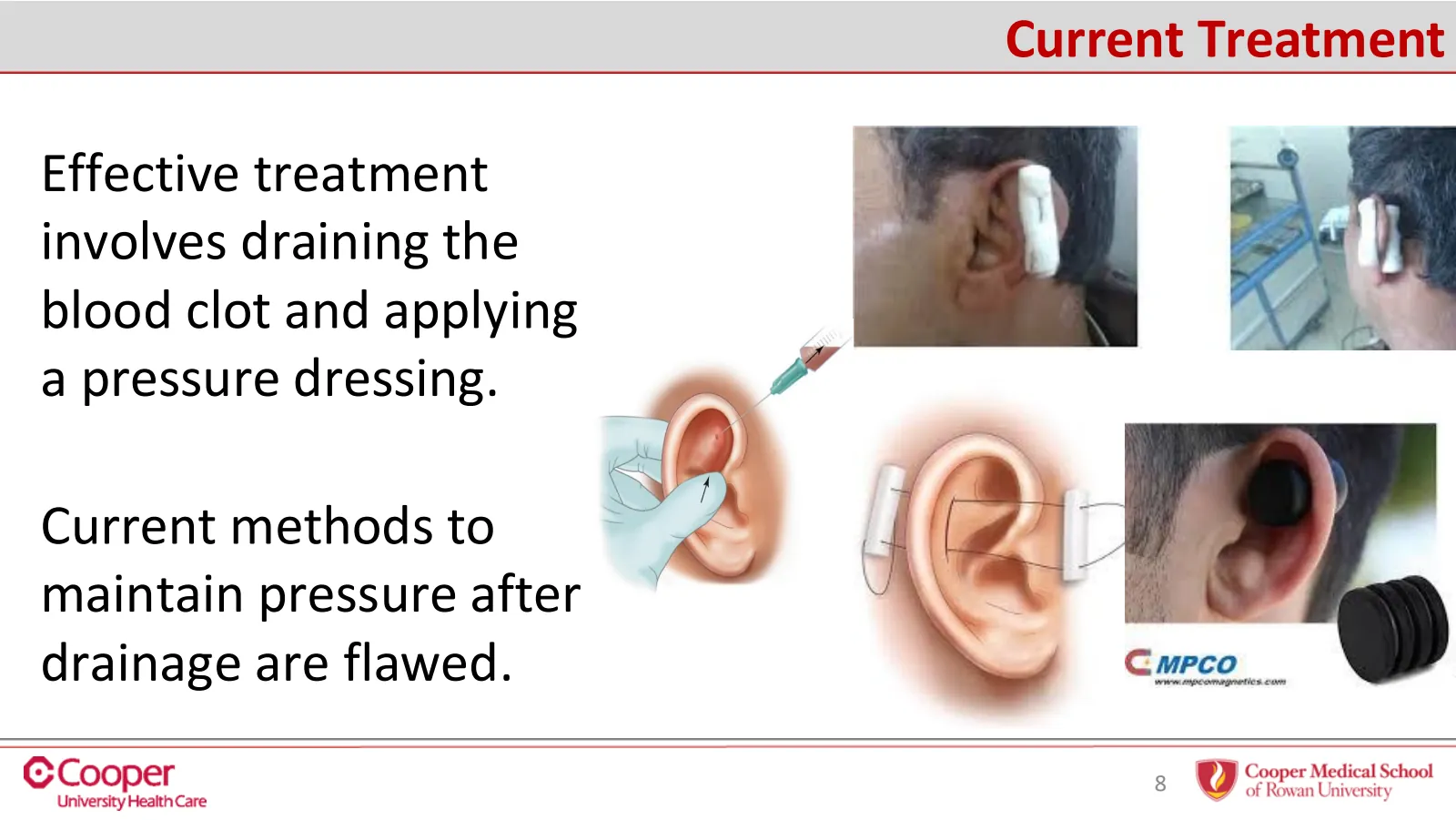
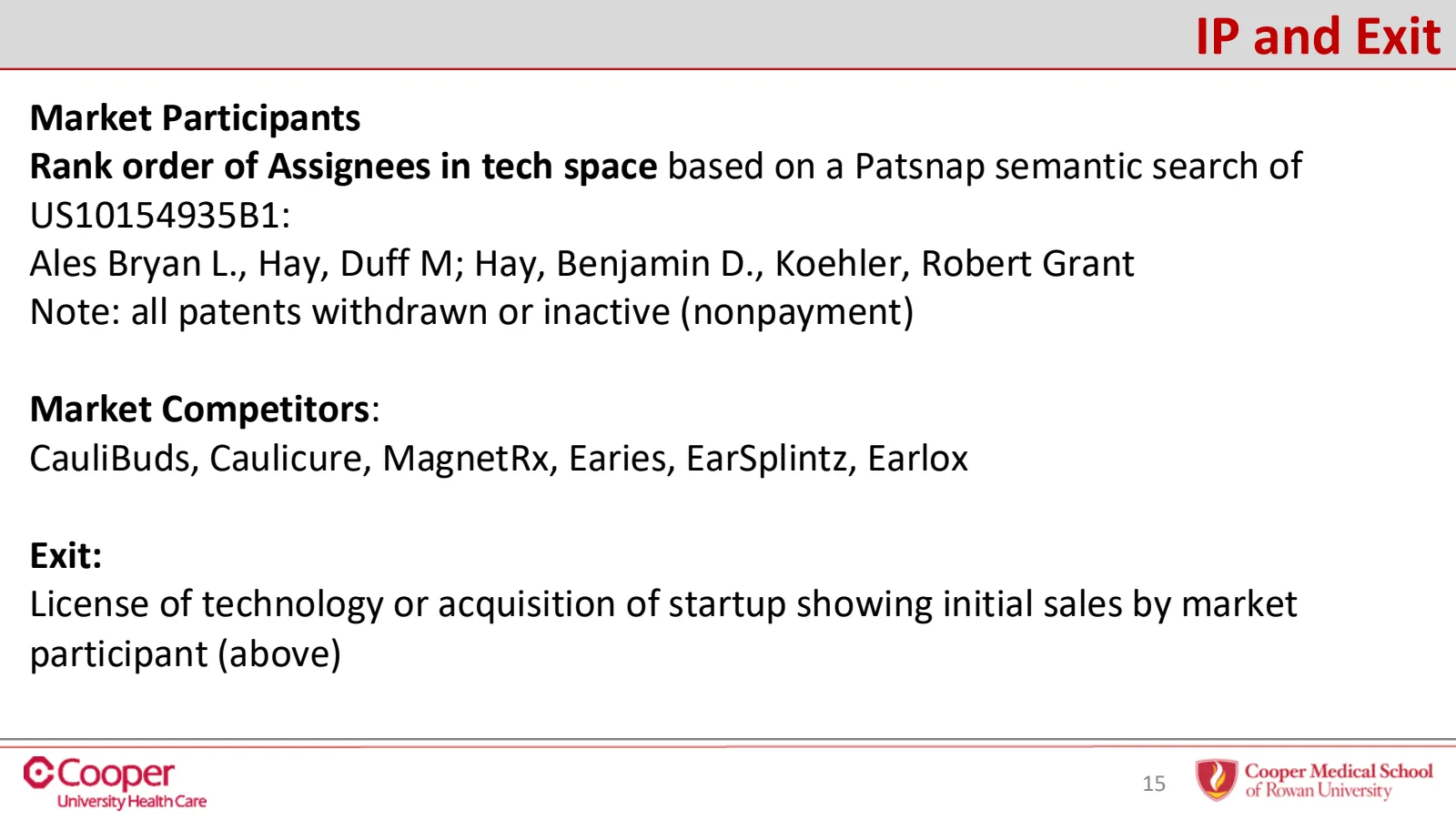
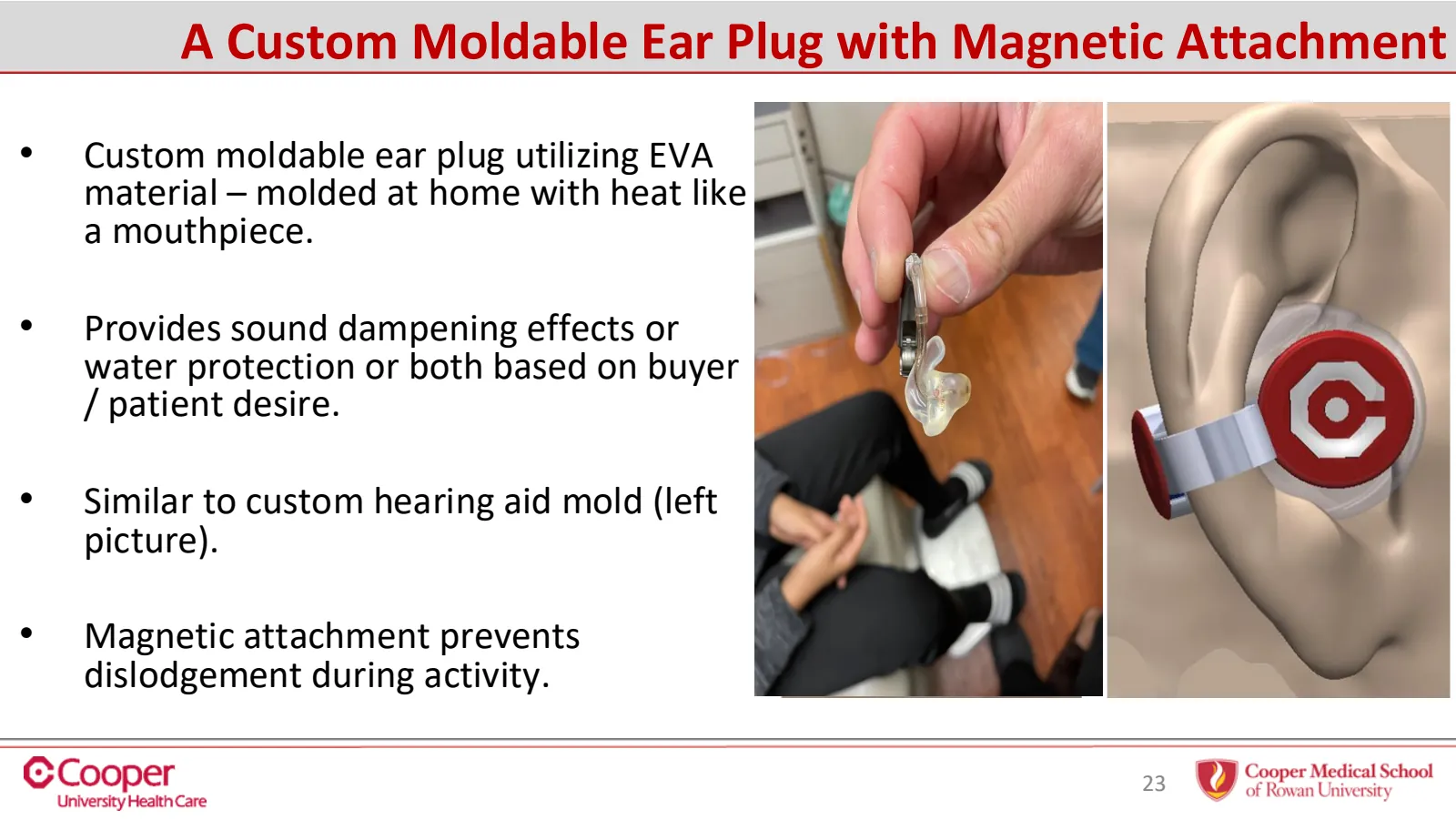
Every prior patent in the space is withdrawn or inactive. Current competitors sell rigid discs that cannot mold to ear contours. No ear plug on the market combines custom molding, water protection, and magnetic retention.
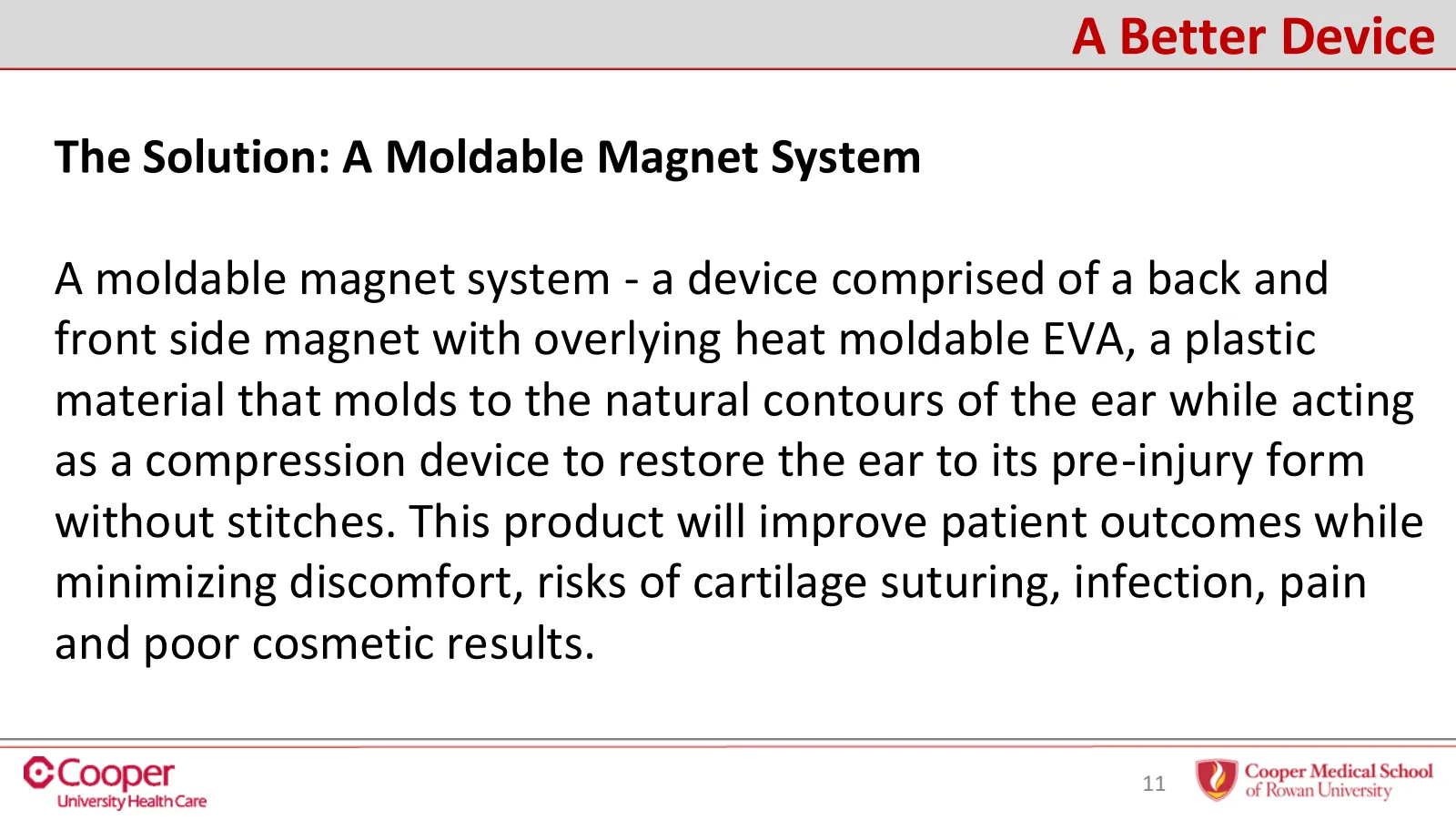
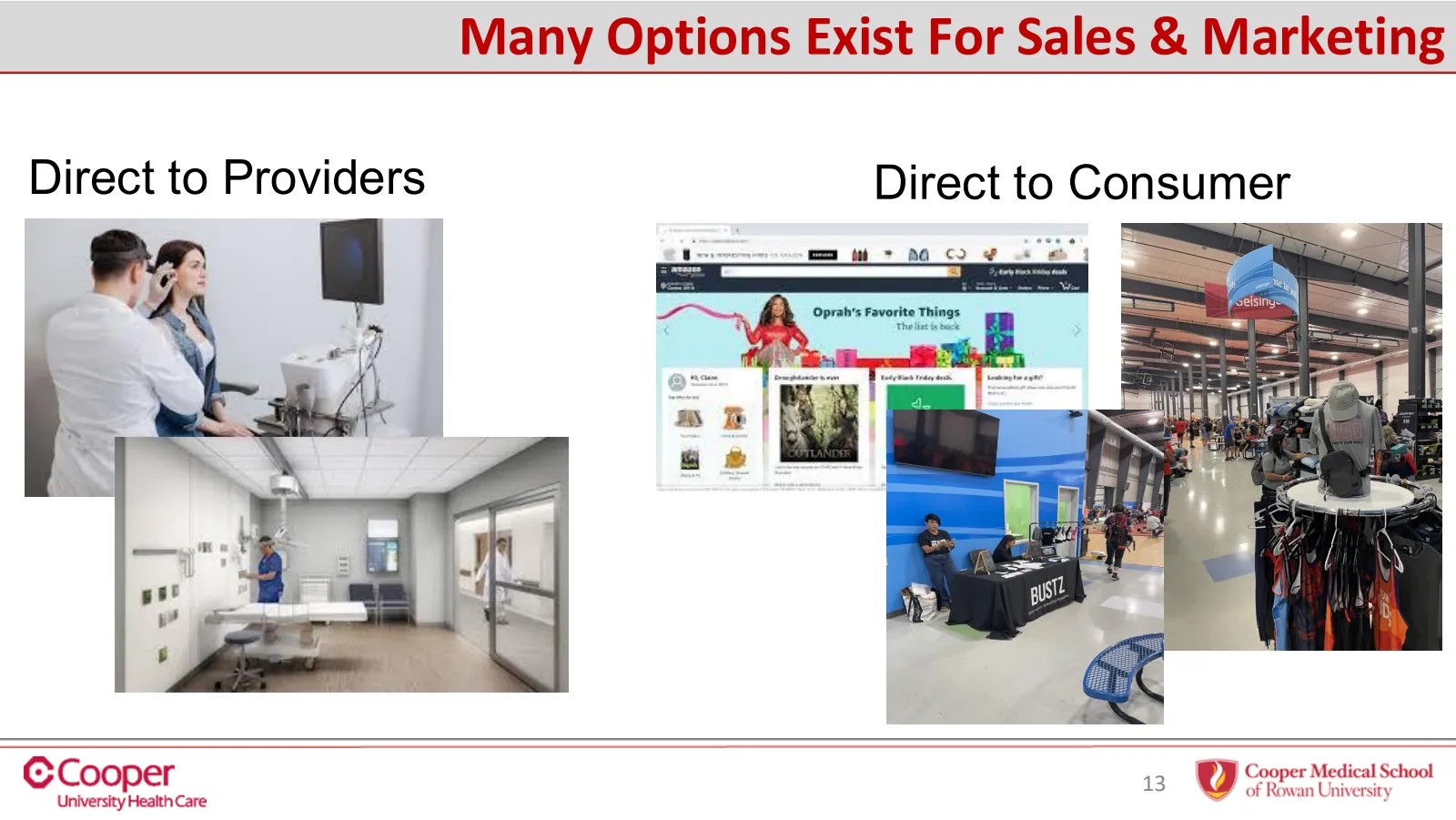
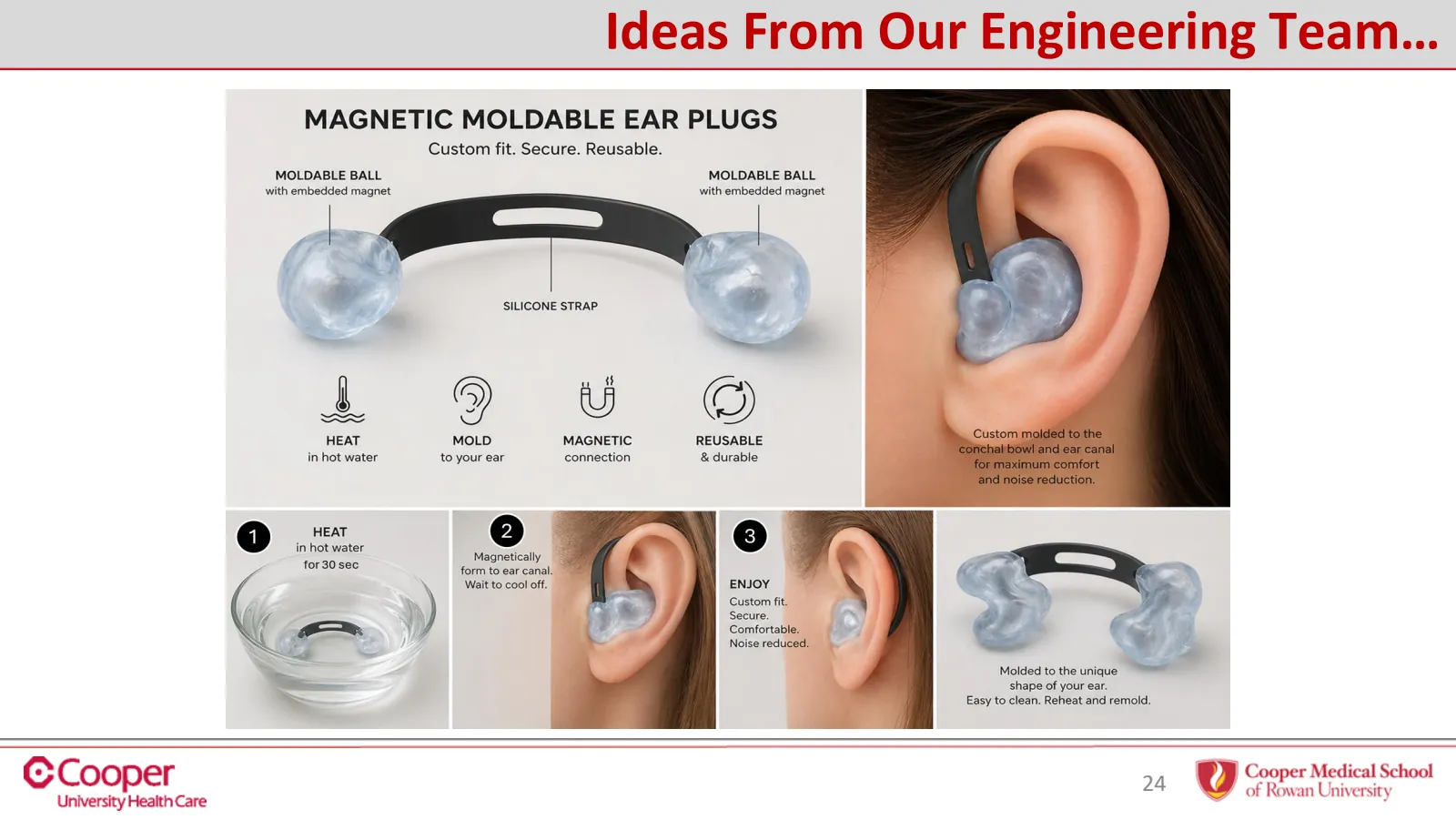
One material system, moldable EVA plus magnets, yields multiple products across treatment, prevention, and comfort, sold direct to providers and direct to consumers. A low-cost Class I pathway keeps time-to-market short.
Market opportunity
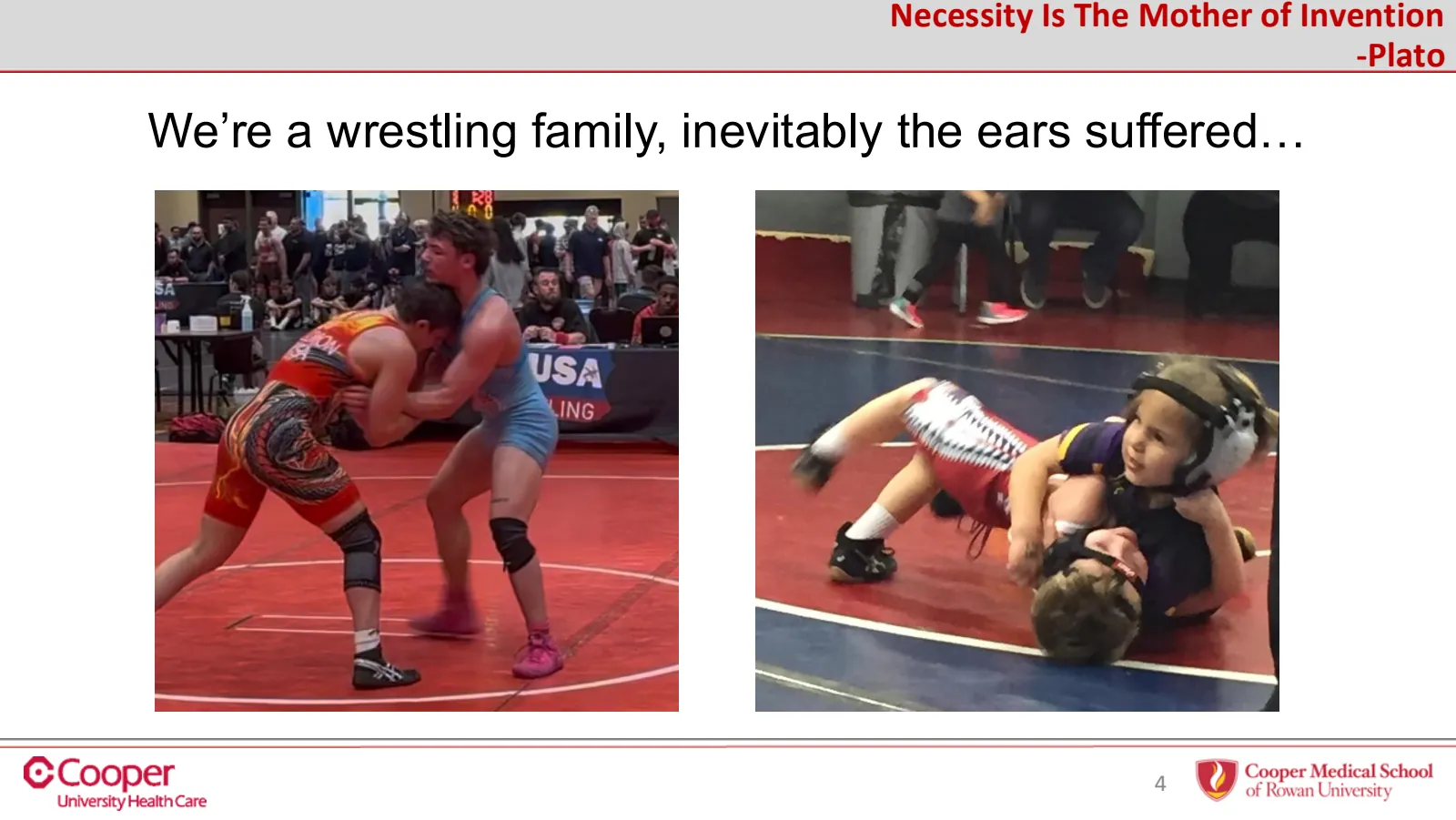
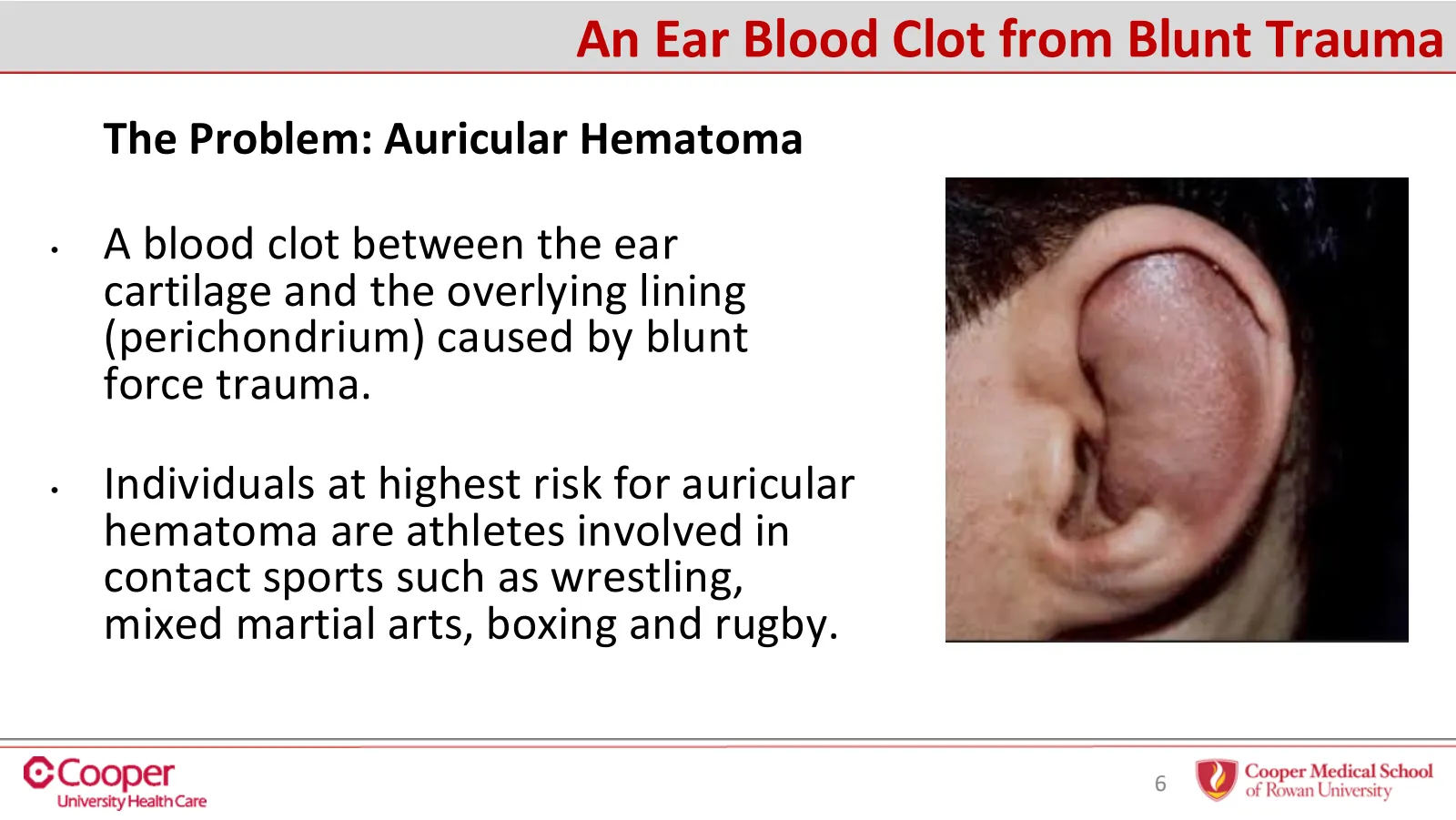
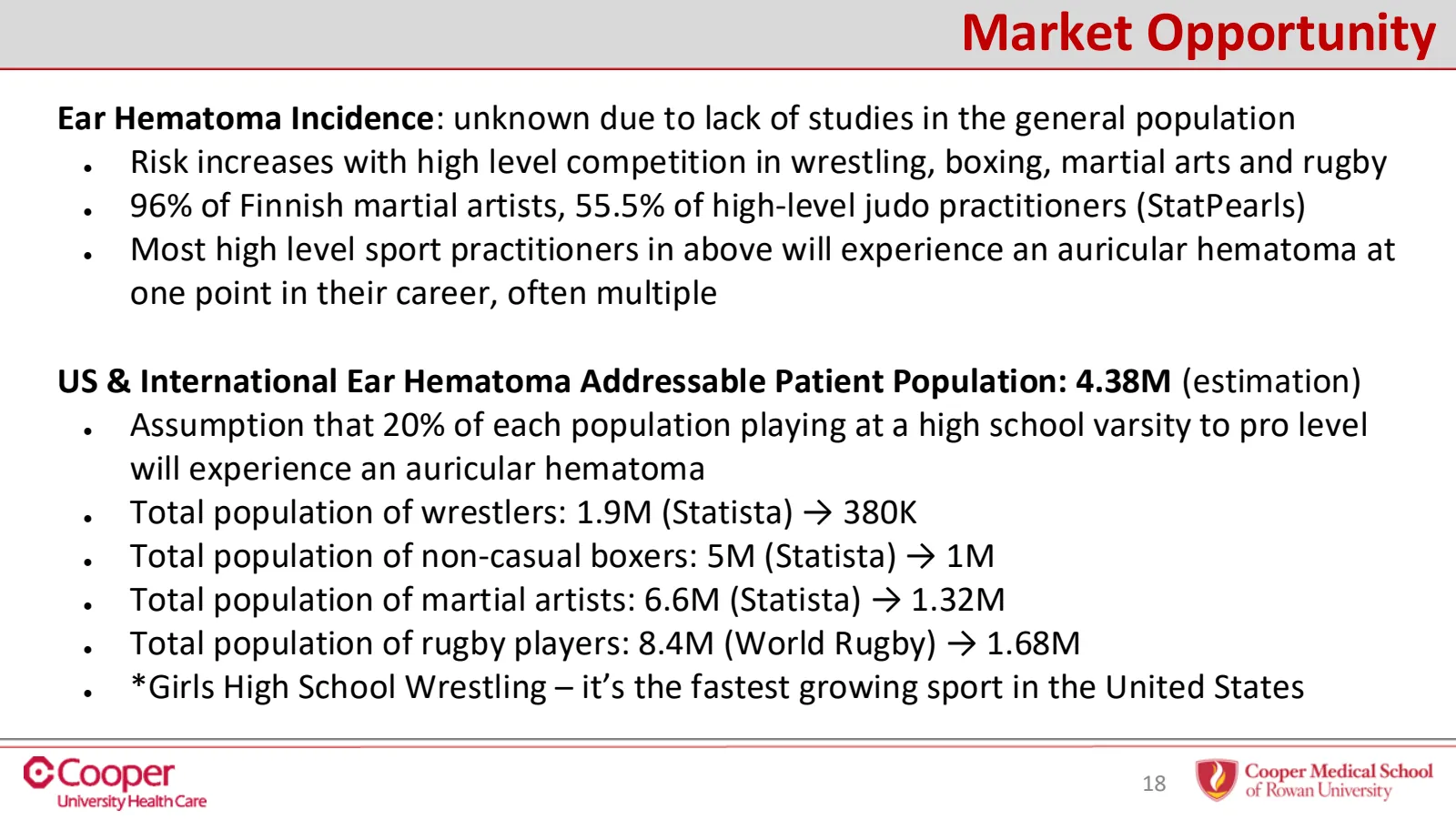
Auricular hematoma risk concentrates in contact-sport athletes competing at high school varsity level and above: an estimated 20% of each population below. Girls' high school wrestling, the fastest-growing sport in the US, is expanding the market each season.
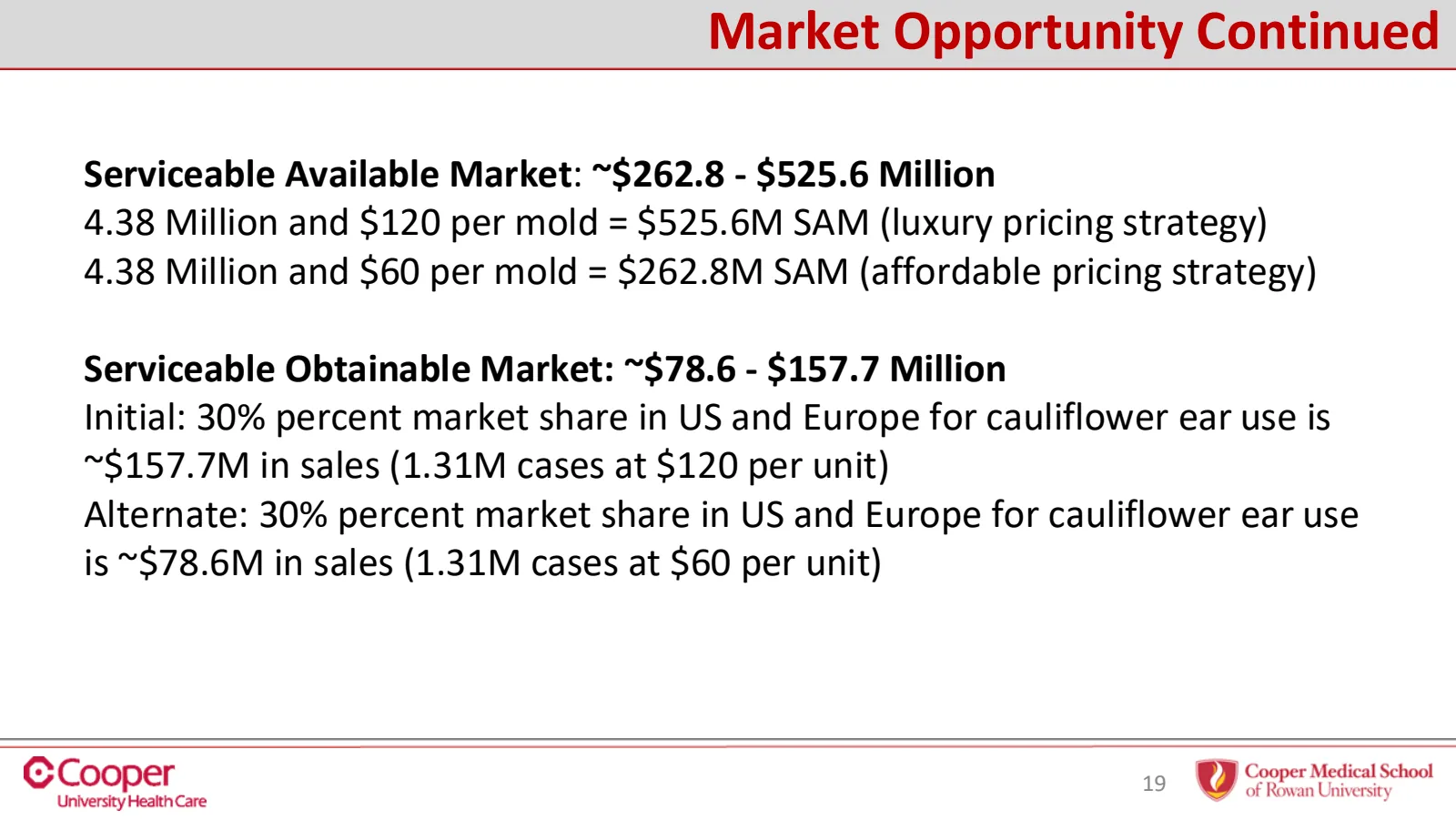
Serviceable available market
$262.8–525.6M
4.38M patients at $60 (affordable) to $120 (premium) per mold.
Serviceable obtainable market
$78.6–157.7M
30% market share across US and Europe, 1.31M cases.
The second market
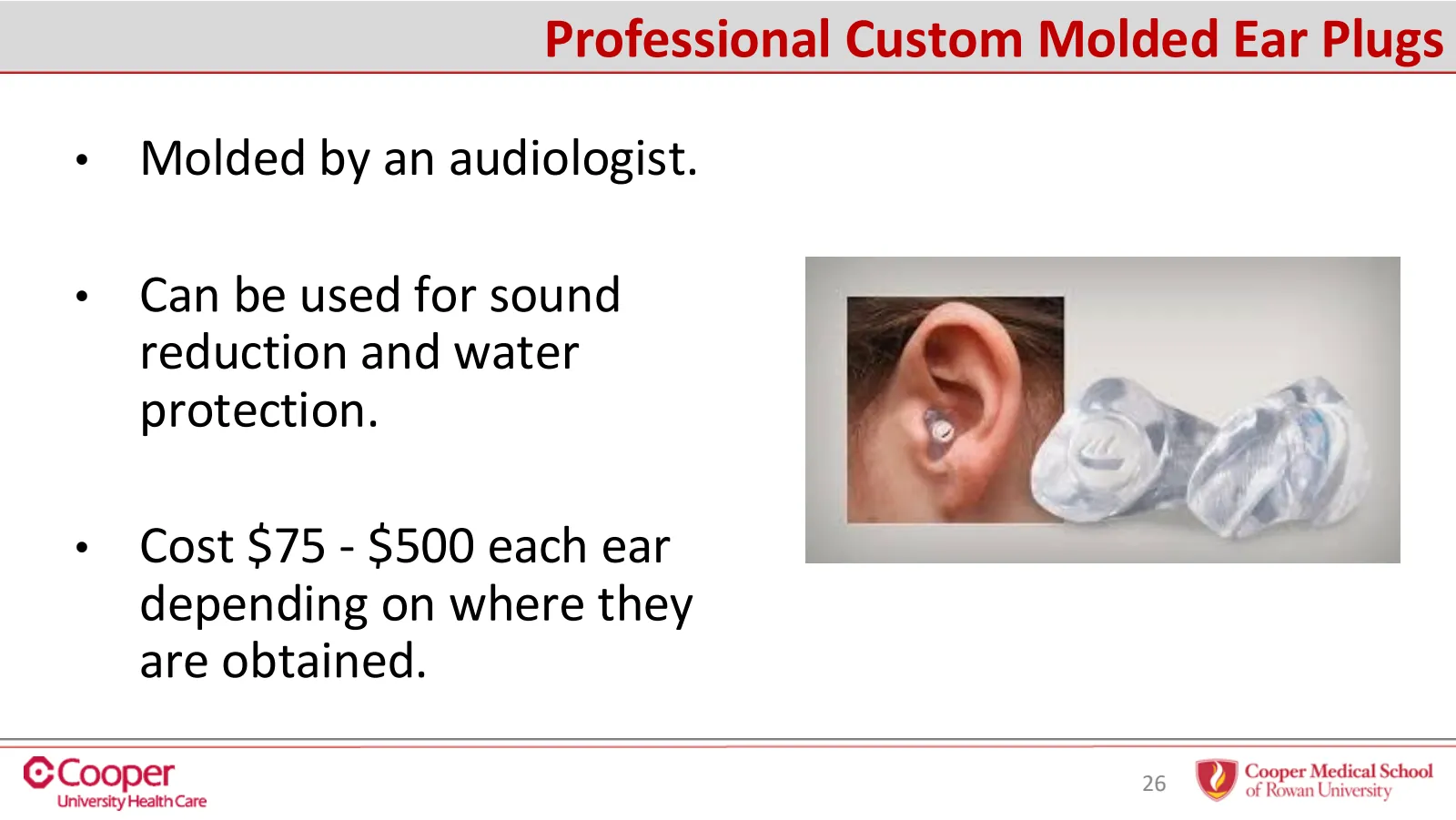
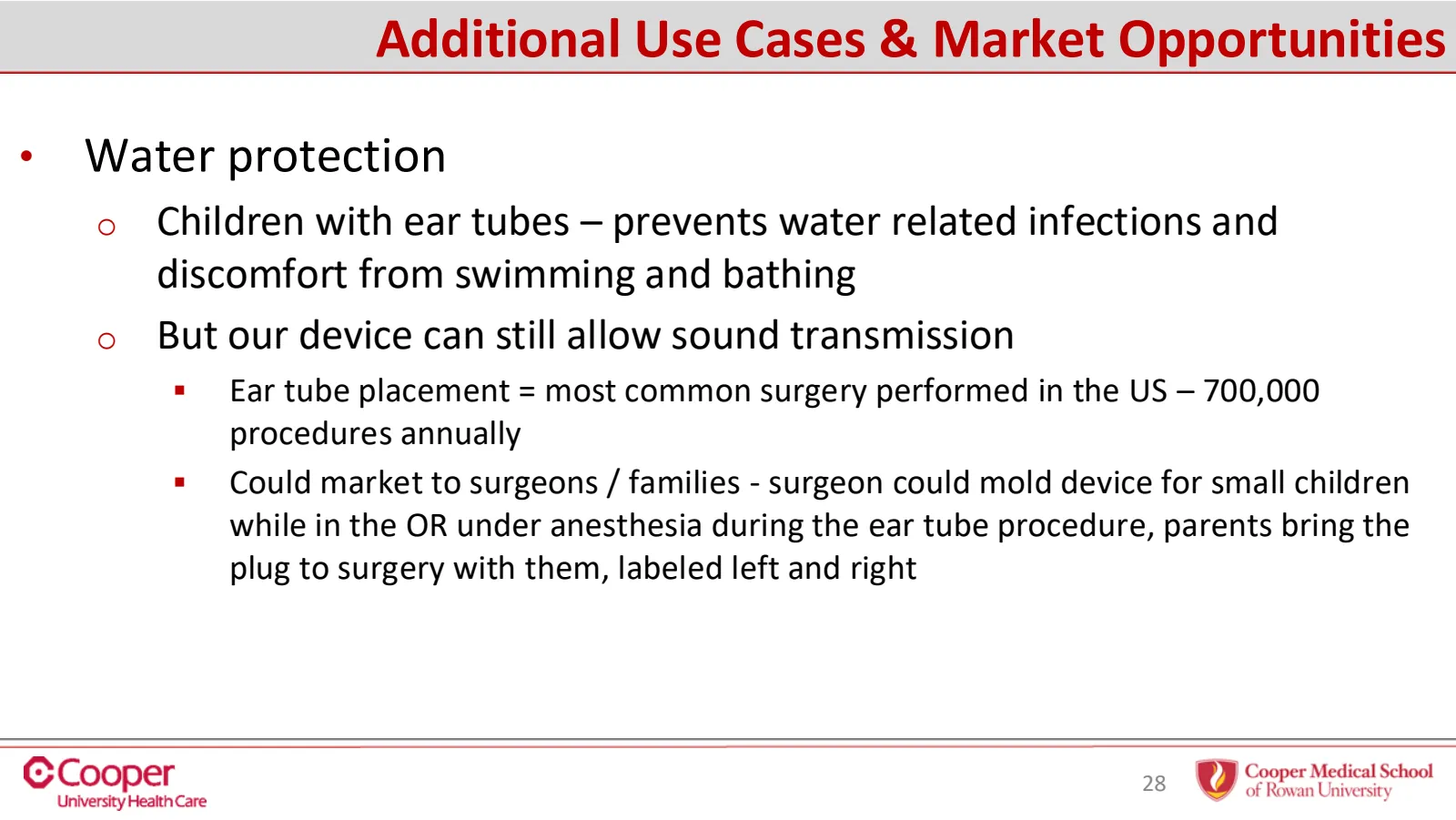
Ear tube placement is the most common surgery in the US: 700,000 procedures a year, each one a family needing reliable, child-sized water protection. Professionally molded plugs run $75–$500 per ear and are outgrown in a season. Our plug molds at home for a fraction of that.
Competitive landscape
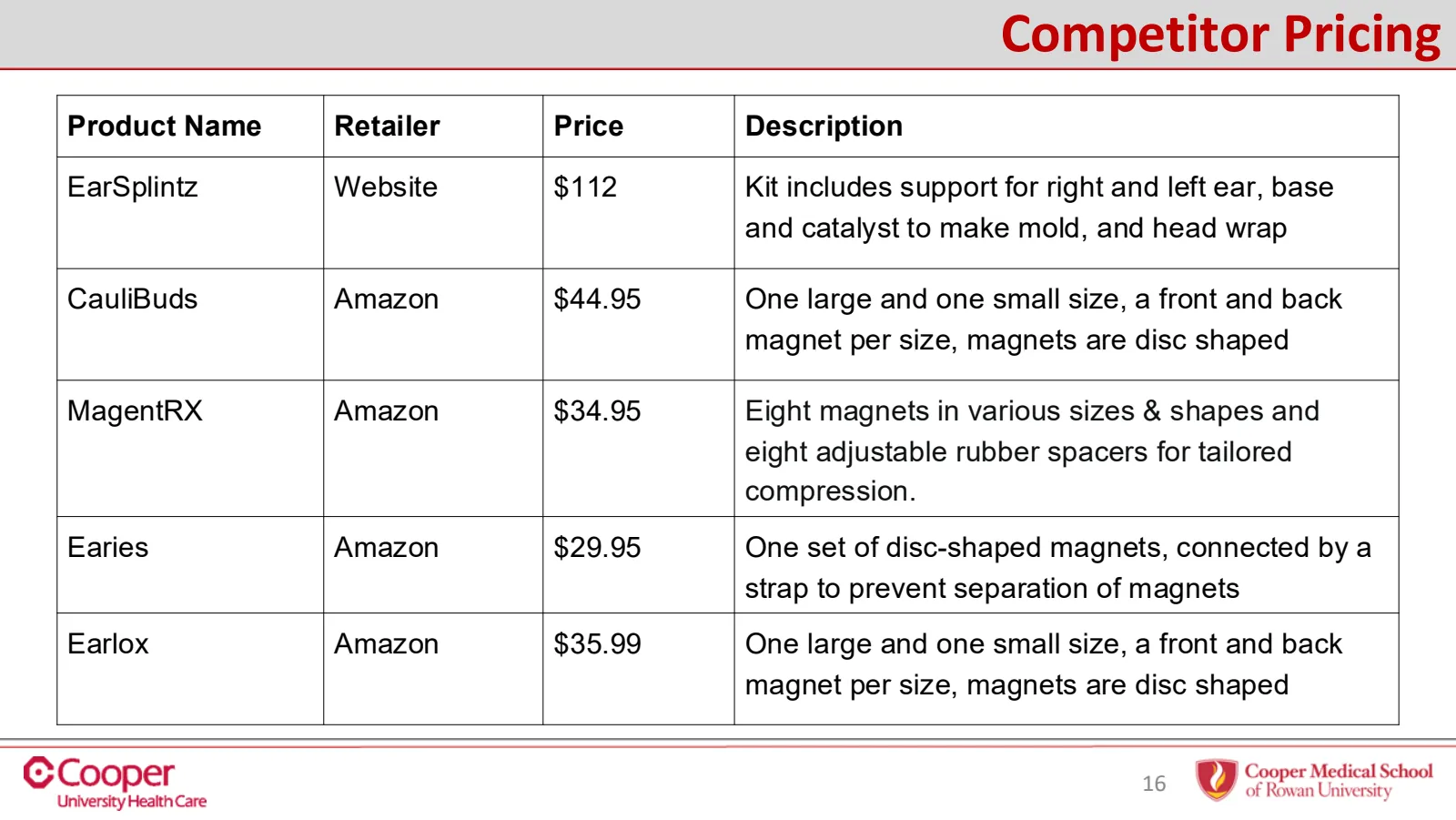
| Product | Price | Limitation |
|---|---|---|
| EarSplintz | $112 | Mold kit with base and catalyst; multi-step preparation, head wrap required |
| CauliBuds | $44.95 | Rigid disc-shaped magnets in two fixed sizes |
| MagnetRx | $34.95 | Assorted rigid magnets with rubber spacers, no molding |
| Earies | $29.95 | Single set of rigid disc magnets on a strap |
| Earlox | $35.99 | Rigid disc magnets in two fixed sizes |
| EarArmor | $60–120 | Fully moldable to individual ear contours: uniform pressure, restores pre-injury form |
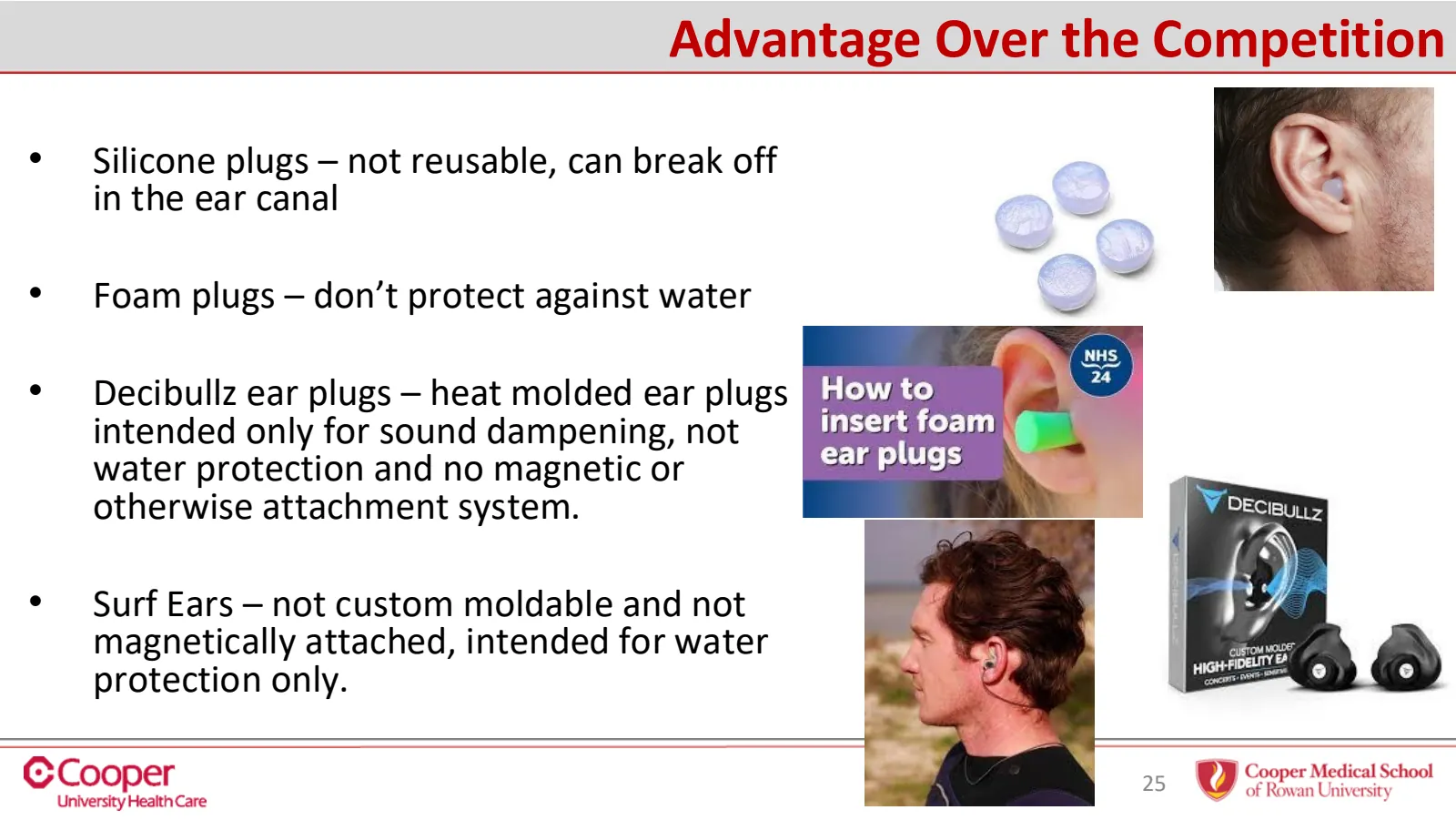
In the ear plug category: silicone plugs are single-use and can break off in the canal; foam offers no water protection; Decibullz molds but is sound-only with no retention system; SurfEars is water-only and neither moldable nor magnetically attached.
Where we are
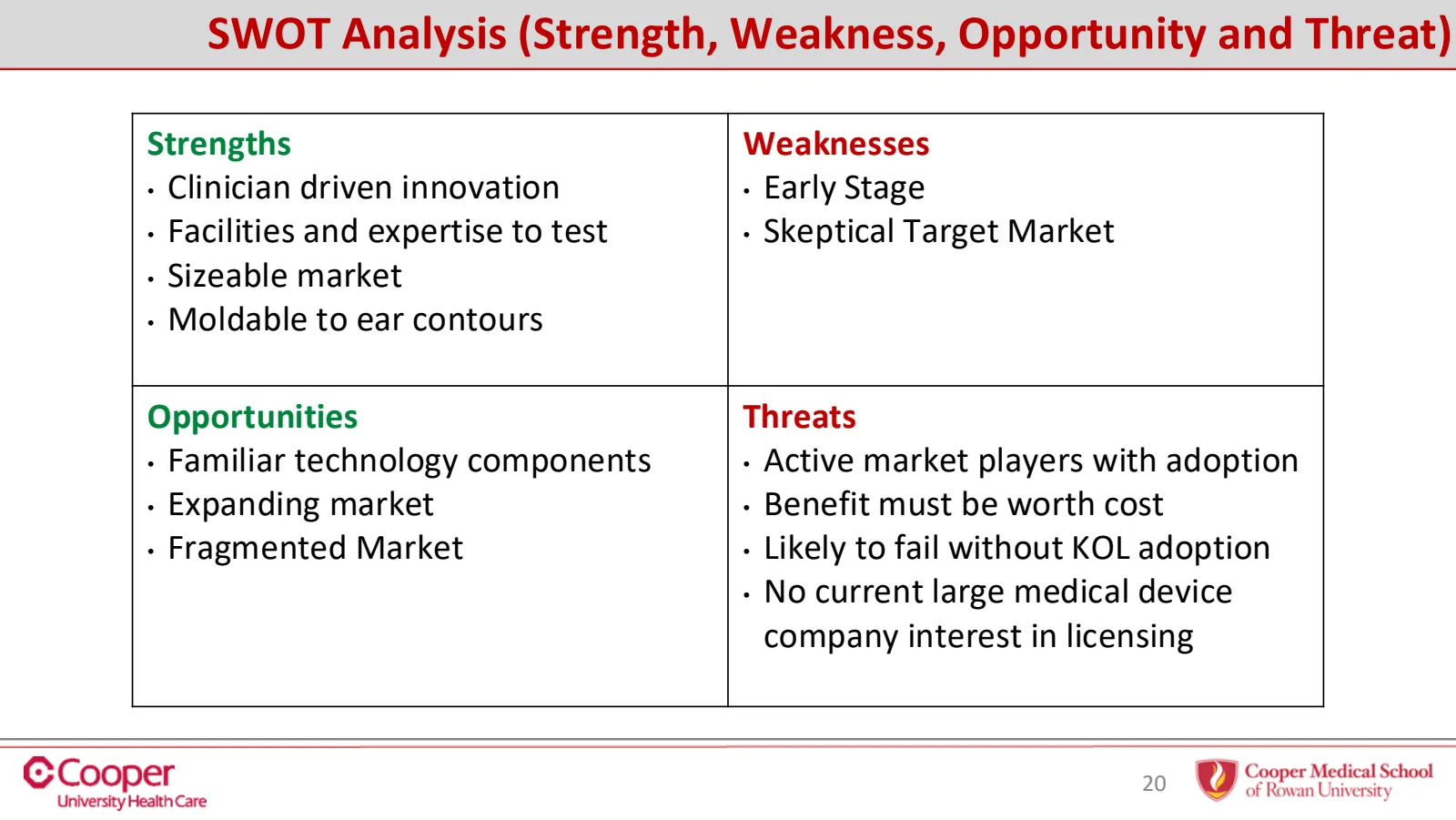
EarArmor is early-stage, and we present it that way. The technical risk is largely behind us; the work ahead is production, registration, and distribution, which is exactly where the right partners change the slope of the curve.
Exit strategy
License of the technology, or acquisition of the startup after initial sales, by an active market participant.
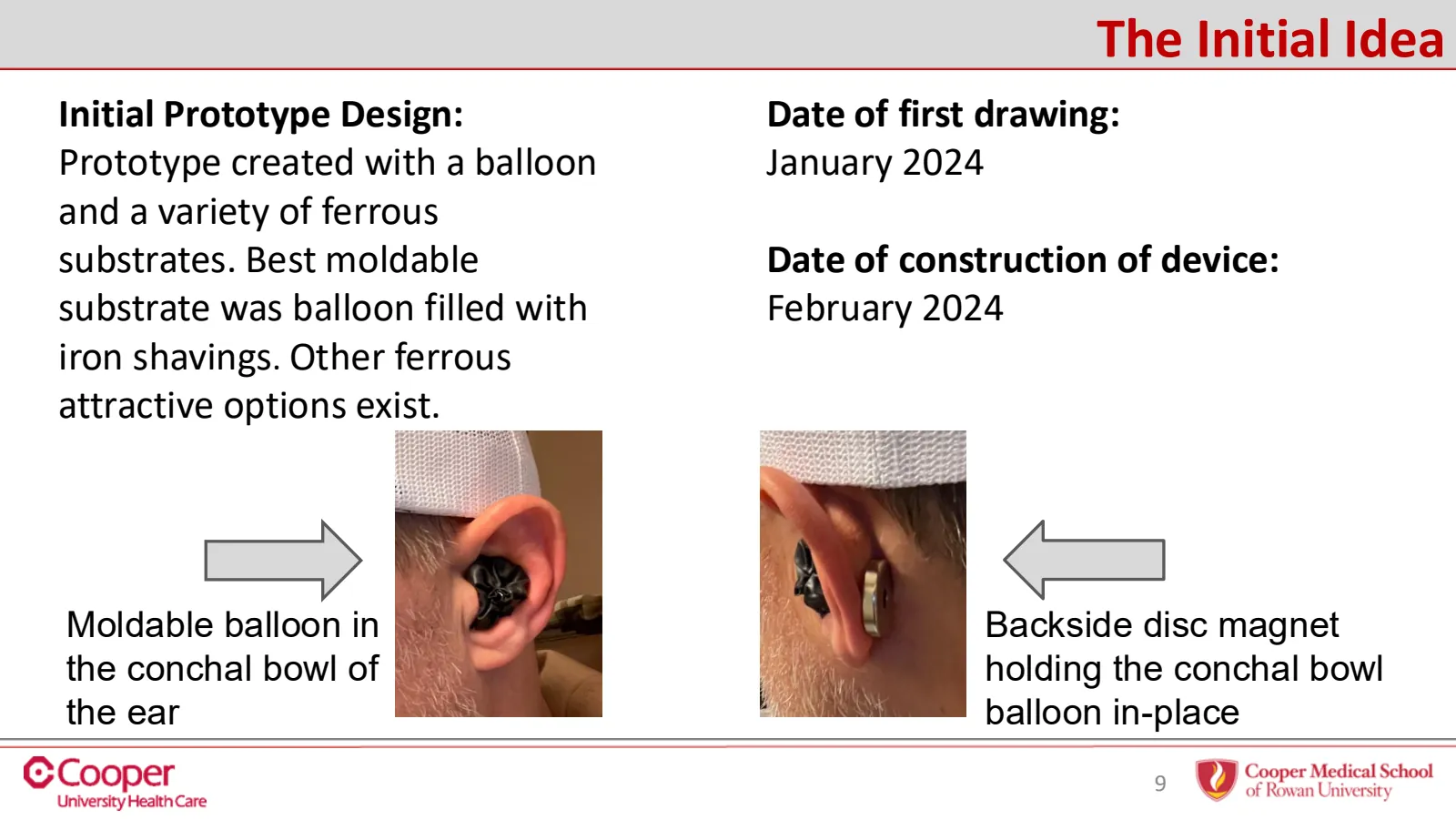
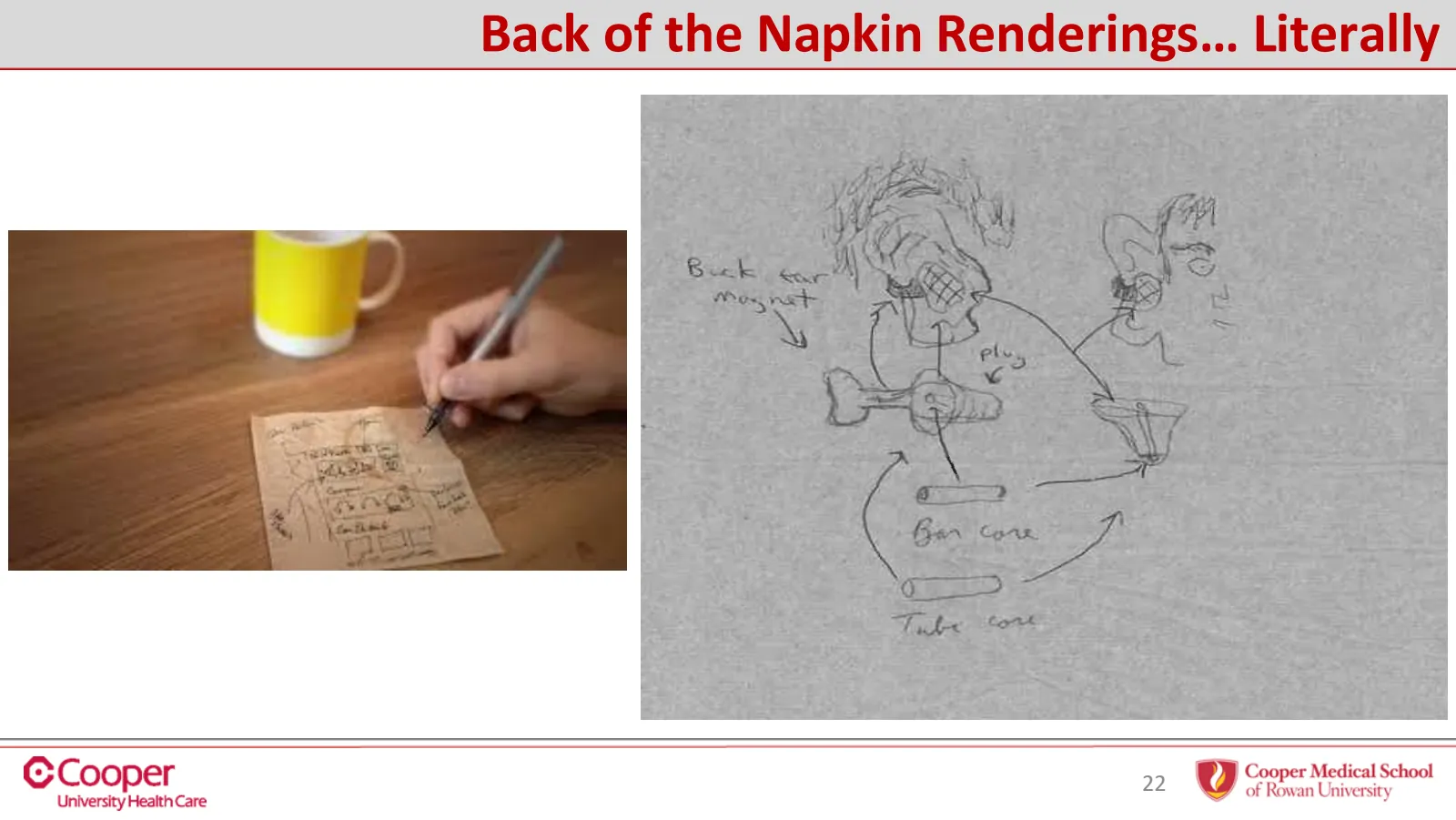
First drawing to working device in one month, tested across ferrous substrates.
CAD design and prototype iteration with Merge Medical Device Studio; US provisional patent application filed; funding support from Foundation Venture Capital Group.
Hematoma system in design finalization with successful use on multiple clinic patients; ear plug system in initial prototyping.
Estimated ~$30K and ~1 month for a Class I device.
Tooling, production, and go-to-market through provider and direct-to-consumer channels: the phase this raise funds.
What we're seeking
Capital to fund manufacturing, tooling, FDA registration, and go-to-market for both product lines.
Medical device companies interested in developing, licensing, or acquiring the moldable magnet technology.
Manufacturing, distribution, and consumer medical device operators who have taken Class I products to market.
The pitch deck
Technology, market analysis, SWOT, regulatory strategy, and the plan. The same deck we present in person.
Download PDF
Start the conversation
Reach Dr. Solomon and the EarArmor team through the contact page, or email directly. Every serious inquiry gets a reply.